Manhattan federal prosecutors on April 29, 2026 unsealed an indictment charging the sitting governor of Mexico’s Sinaloa state and nine other current and former Mexican officials with conspiring to help the Sinaloa Cartel move enormous quantities of narcotics into the United States — one of the most senior foreign officeholders ever charged in the Southern District of New York.
The charges
The indictment, announced by U.S. Attorney Jay Clayton, names Governor Rubén Rocha Moya and nine co-defendants described as current or former high-ranking government and law-enforcement officials in Sinaloa. Prosecutors allege the officials partnered with the cartel to distribute massive quantities of narcotics to the United States, providing official protection in exchange for the trafficking operation’s continued reach.
According to the SDNY, Rocha Moya — governor since November 1, 2021 — was elected with the help of the cartel faction known as the “Chapitos,” who allegedly kidnapped and intimidated his rivals to clear his path. In return, prosecutors say, Rocha Moya attended meetings with the Chapitos both before and after taking office, promised to protect them, and as governor allowed them to operate with impunity in the state.
Rocha Moya faces charges including narcotics-importation conspiracy, possession of machine guns and destructive devices, and a related conspiracy count. If convicted, prosecutors said, he could face life in prison or a mandatory minimum of 40 years.
The New York nexus
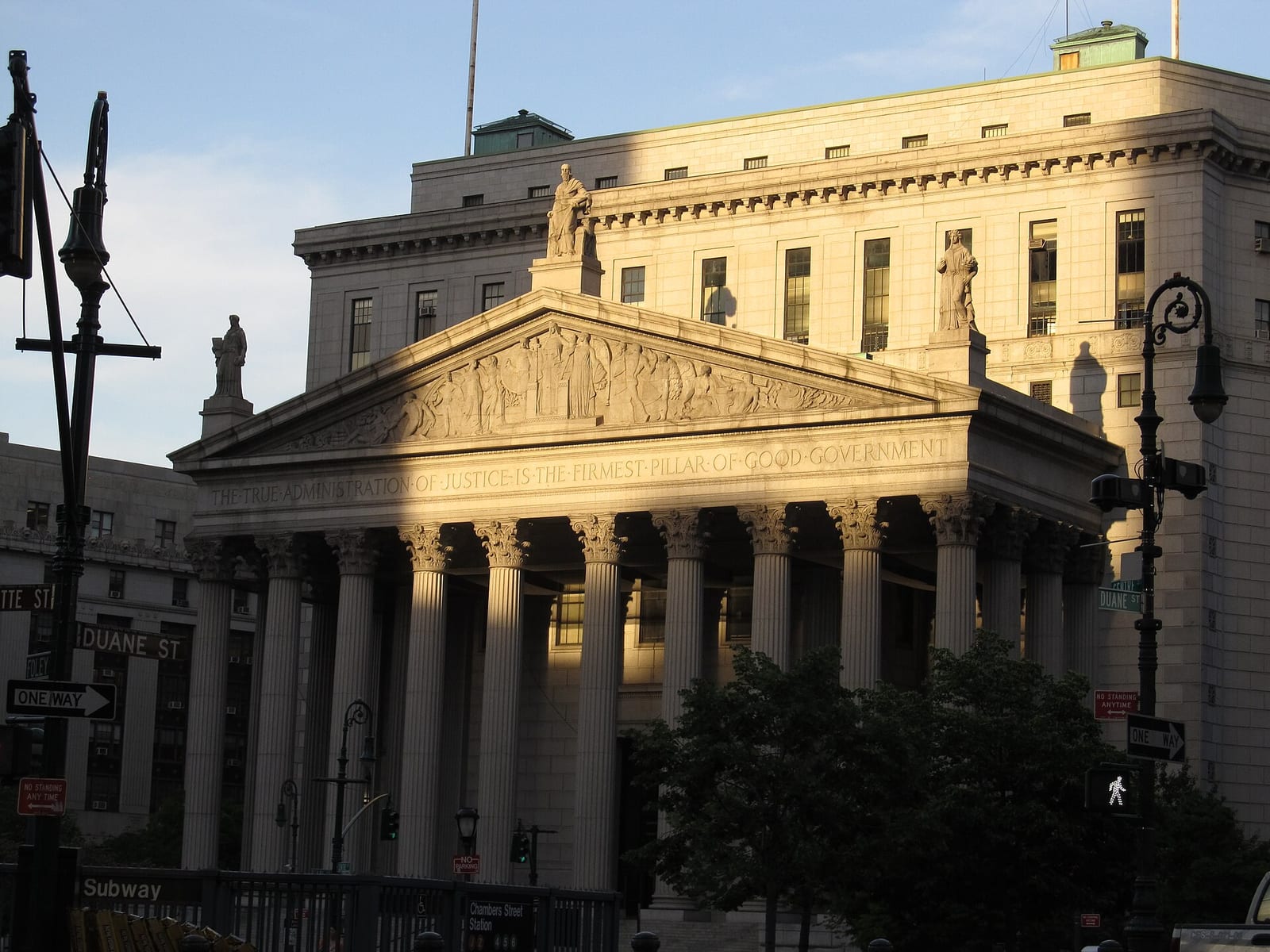
The Southern District of New York, headquartered in Lower Manhattan, has for decades served as the venue for the U.S. government’s most significant international narcotics prosecutions, from cartel leaders to the financial networks that launder drug proceeds. The district’s jurisdiction in cartel cases typically rests on the flow of drugs, money, or communications through the New York area, and SDNY’s narcotics and terrorism units have built a long institutional track record handling defendants extradited or captured abroad.
The Sinaloa indictment lands amid an intensified federal push against the cartel under the Trump administration, which has designated major cartels as foreign terrorist organizations and pressed prosecutors to pursue not just traffickers but the officials accused of shielding them. It followed the January 2026 transfer of former Venezuelan president Nicolás Maduro to SDNY custody on narco-terrorism charges, also prosecuted by Clayton’s office — underscoring the district’s central role in the administration’s cross-border drug-war strategy.
The fallout in Mexico
Days after the indictment was unsealed, Rocha Moya submitted a request to the Sinaloa State Congress for a temporary leave from the governorship while the U.S. case proceeds. He has remained in Mexico, where he denies wrongdoing.
His physical location is the central practical obstacle. A sitting or recently sitting Mexican governor is not in U.S. custody, and any prosecution on the merits would depend on extradition — a politically fraught process between the two governments, particularly for a serving state official. For now, the indictment functions as much as a diplomatic and political pressure point as an imminent trial.
Why it matters for New York
Beyond the geopolitics, the case is a reminder of SDNY’s outsized role as a national and international prosecutor operating out of New York City. The same office that handles Wall Street fraud and city-corruption cases is the venue through which the United States is pursuing a foreign head of state and a sitting governor — a reach that makes Lower Manhattan’s federal courthouse a recurring stage for the country’s highest-profile criminal cases. The defendants are presumed innocent unless and until convicted.
Verification
- SDNY unsealed an indictment April 29, 2026 charging Sinaloa Governor Rubén Rocha Moya and nine other Mexican officials with drug-trafficking and weapons offenses; announced by U.S. Attorney Jay Clayton — https://thehill.com/homenews/administration/5856942-trump-era-mexican-officials-indicted/ ; https://www.occrp.org/en/news/us-indicts-sinaloa-governor
- Allegations that the “Chapitos” helped elect Rocha Moya (governor since Nov. 1, 2021) and that he protected them; potential life sentence or 40-year mandatory minimum — https://www.occrp.org/en/news/us-indicts-sinaloa-governor ; https://www.riotimesonline.com/sinaloa-governor-rocha-moya-indicted-us-doj-narcotics/
- Rocha Moya requested a temporary leave from the governorship after the indictment — https://www.cnn.com/2026/05/02/americas/mexico-sinaloa-governor-step-down-latam-intl ; https://www.cbsnews.com/news/mexican-governor-accused-of-drug-trafficking-steps-down/
- SDNY’s parallel January 2026 prosecution of Nicolás Maduro on narco-terrorism charges, also under Jay Clayton — https://www.cnbc.com/2026/01/05/venezuela-maduro-court-trump.html
Frequently Asked Questions
- Who was charged in the SDNY Sinaloa indictment?
- Rubén Rocha Moya, the sitting governor of Mexico's Sinaloa state, and nine other current and former Mexican government and law-enforcement officials, charged with drug-trafficking and weapons offenses tied to the Sinaloa Cartel.
- Who announced the case?
- Jay Clayton, the U.S. Attorney for the Southern District of New York, which unsealed the indictment on April 29, 2026.
- What does Rocha Moya face if convicted?
- Charges including narcotics-importation conspiracy and possession of machine guns and destructive devices; prosecutors said he could face life in prison or a mandatory minimum of 40 years.
- What happened to the governor after the indictment?
- Rocha Moya requested a temporary leave from the governorship while the U.S. case proceeds. He remained in Mexico, which complicates any extradition.