The artist who put a urinal in a gallery and called it sculpture is back at the center of New York’s art world. “Marcel Duchamp” opened at the Museum of Modern Art on April 12, 2026, the first North American retrospective of the artist’s work in more than 50 years. It runs through August 22.
Half a century in the making
The last major U.S. survey of Duchamp came in 1973, the year MoMA and the Philadelphia Museum of Art mounted a joint retrospective shortly after the artist’s death. For a figure whose ideas reshaped 20th-century art — the readymade, the abandonment of “retinal” painting, the blurring of art and chance — a half-century gap between full retrospectives is conspicuous. MoMA’s new presentation aims to close it, tracing six decades of work across painting, sculpture, film, photography, drawings and printed matter.
The exhibition is a three-way collaboration among the Museum of Modern Art, the Philadelphia Museum of Art and the Centre Pompidou in Paris — the three institutions that between them hold the deepest concentrations of Duchamp material in the world. The Philadelphia Museum, in particular, is the permanent home of the artist’s late masterwork “Étant donnés” and the bulk of the Arensberg collection, making its loans central to any comprehensive survey.
The curatorial team
The show is organized by Ann Temkin, MoMA’s Marie-Josée and Henry Kravis Chief Curator of Painting and Sculpture, and Michelle Kuo, the museum’s Chief Curator at Large and Publisher, with Matthew Affron, the Muriel and Philip Berman Curator of Modern Art at the Philadelphia Museum of Art. Their framing positions Duchamp not as a one-off provocateur but as an artist whose six-decade output — from early Cubist-inflected painting through the readymades to his final tableau — forms a continuous, deliberate inquiry into what art can be.
Why Duchamp still matters
Born in 1887 in Normandy and a longtime New Yorker, Duchamp is arguably the most influential artist of the past century whose reputation rests less on objects than on ideas. His “Fountain” — a porcelain urinal submitted under the pseudonym R. Mutt to a 1917 New York exhibition — became the founding gesture of conceptual art, and his insistence that the artist’s choice, not the artist’s hand, could make a work has echoed through Pop, Minimalism, Fluxus and nearly everything that calls itself contemporary. Bringing a full retrospective back to New York, the city where Duchamp spent decades and helped define the avant-garde, lets a generation that knows him only through textbooks and reproductions encounter the work directly.
A crowded spring for the museums
The Duchamp show anchors an unusually dense spring season for New York’s institutions. Across the river, MoMA PS1 opens “Greater New York 2026,” the sixth edition of its survey of artists working in the New York area, on April 16. The Brooklyn Museum’s North American debut of “Iris van Herpen: Sculpting the Senses” opens May 16. The convergence gives the city a rare stretch in which a foundational modernist, a contemporary New York survey and a futuristic fashion retrospective are all on view at once.
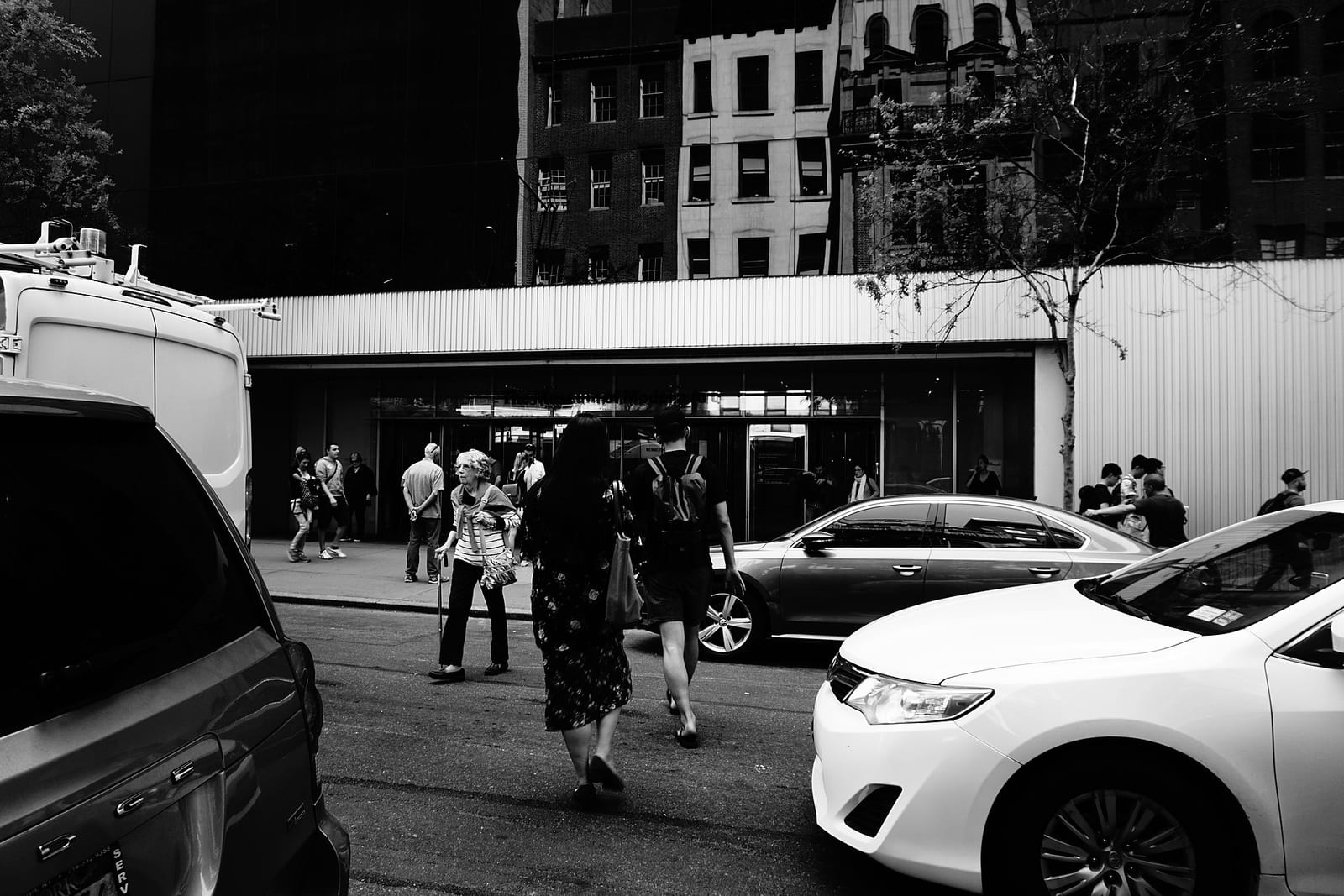
“Marcel Duchamp” is on view at the Museum of Modern Art, 11 West 53rd Street, through August 22, 2026.
Verification
- Exhibition title, dates (April 12–August 22, 2026), “first North American retrospective in over 50 years,” six-decade scope, and curators (Temkin, Kuo, Affron) — MoMA press: https://press.moma.org/exhibition/marcel-duchamp/
- Three-institution organization (MoMA, Philadelphia Museum of Art, Centre Pompidou) and 1973 prior retrospective context — MoMA press: https://press.moma.org/exhibition/marcel-duchamp/
- “Greater New York 2026” at MoMA PS1 opening April 16, 2026 — MoMA press: https://press.moma.org/exhibition/greater-new-york-2026/
- Brooklyn Museum “Iris van Herpen: Sculpting the Senses” opening May 16, 2026 — Brooklyn Museum: https://www.brooklynmuseum.org/exhibitions/iris-van-herpen
Frequently Asked Questions
- When is the Marcel Duchamp show at MoMA?
- 'Marcel Duchamp' is on view at the Museum of Modern Art from April 12 through August 22, 2026.
- Why is this exhibition significant?
- It is the first North American retrospective of Duchamp's work in more than 50 years; the last major U.S. survey was in 1973. The show traces six decades across painting, sculpture, film, photography, drawings and printed matter.
- Who organized the exhibition?
- It is a collaboration of MoMA, the Philadelphia Museum of Art and the Centre Pompidou in Paris, curated by MoMA's Ann Temkin and Michelle Kuo with the Philadelphia Museum's Matthew Affron.
- Where is the show located?
- The Museum of Modern Art, 11 West 53rd Street in Midtown Manhattan.