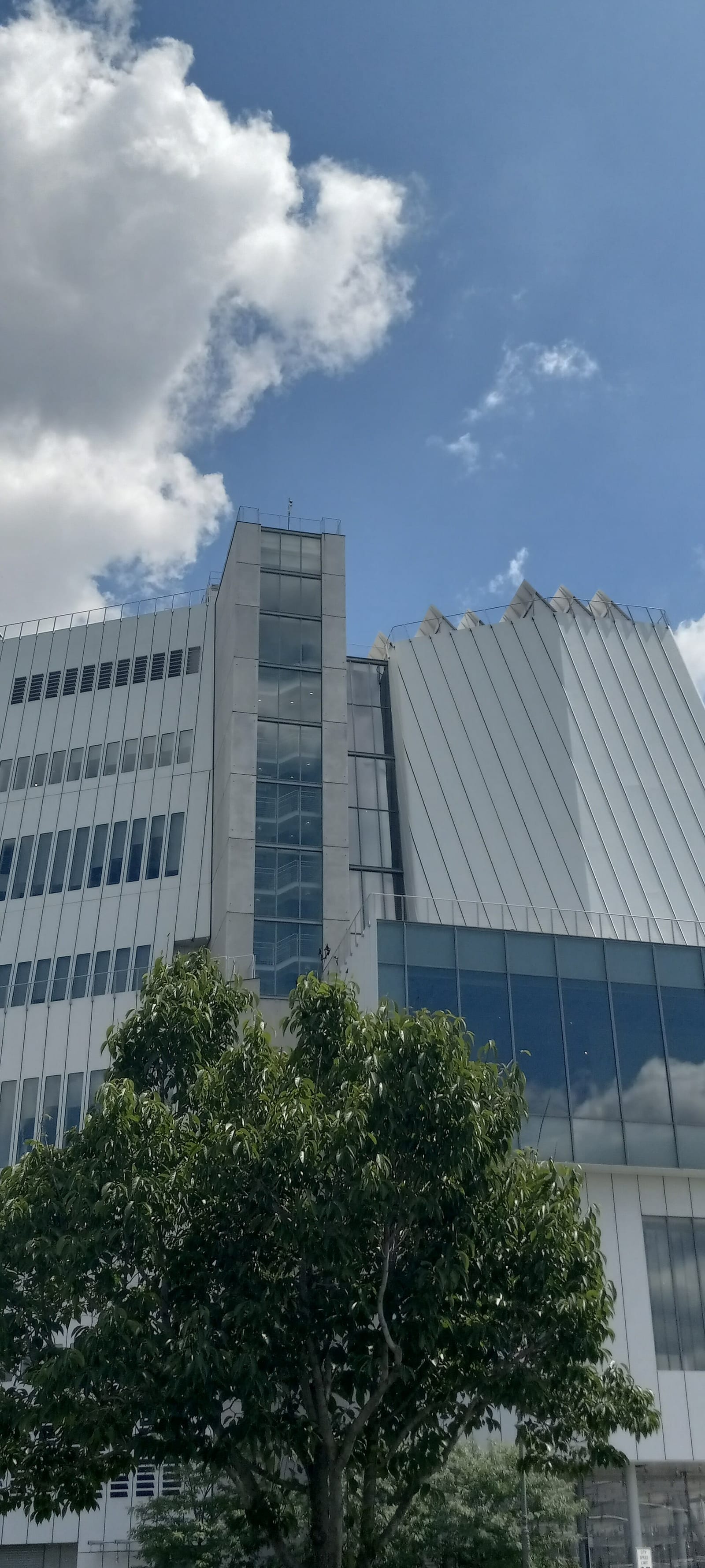
The Whitney Museum of American Art opened its 82nd Biennial to the public on March 8, 2026, and the most striking thing about the edition is what it refuses to do: it does not declare a theme. Co-curated by Marcela Guerrero, the DeMartini Family Curator, and Drew Sawyer, the Sondra Gilman Curator of Photography, the 2026 Biennial gathers 56 artists, duos and collectives and turns the survey’s usual mandate — to take the temperature of American art — into an open question about what “American” even means.
What the show is
The Biennial occupies the Whitney’s museum at 99 Gansevoort Street in the Meatpacking District and runs through August 23, 2026. Member previews ran March 4 through 7 before the public opening. Guerrero and Sawyer worked with Biennial Curatorial Assistant Beatriz Cifuentes and Rubio Butterfield Family Fellow Carina Martinez.
Rather than a slogan, the curators have described the show as an invitation to “tune in” to the moods of contemporary life — what binds people together, and what strains those bonds. The participating artists, the museum says, explore interspecies kinships, familial relations, geopolitical entanglements, technological affinities, infrastructural networks, precarious ecologies and shared mythologies. It is, in the museum’s own framing, “less a definitive answer than an invitation.”
The artists and the work
Among the 56 participants are Taína H. Cruz, Kelly Akashi, Leo Castañeda, the collaborative duo Basel Abbas and Ruanne Abou-Rahme, Andrea Fraser, Mao Ishikawa, Pat Oleszko and Raven Halfmoon. Featured works include Cruz’s billboard piece I Saw the Future and It Smiled Back (2025), Akashi’s Monument (Altadena) (2026) and Michelle Lopez’s Pandemonium (2025).
In its review, The Art Newspaper identified five “red threads” running through the un-themed show: connections between species; complicating history and the legacy of U.S. interventionism; cities and capitalist systems; seeing and being seen, including surveillance; and family, both biological and chosen. Among the standouts the paper singled out: Emilie Louise Gossiaux’s roughly 100 ceramic dog-toy replicas honoring their late guide dog London; Oswaldo Maciá’s Requiem for the Insects, which combines sound, smell and sculpture; Akira Ikezoe’s paintings of animals running energy infrastructure; Mao Ishikawa’s photographs of Black soldiers in 1970s–80s Okinawa; and Ali Eyal’s surrealist Look Where I Took You, drawn from childhood memories before the Iraq War.
The argument underneath
Sawyer has described the contemporary United States as a “pointillist empire” — what he characterizes as a web of roughly 800 military bases and territories — and has asked whether artists from regions shaped by that reach can be “held within” an American art survey “without reducing their perspectives to identity.” Guerrero, for her part, has pushed the edition away from “exceptionalism” and toward imagining kinships that are “animal, plant and otherwise.”
The result, by critical accounts, is a Biennial that engages politics “abstractly, poetically or ambivalently” rather than through explicit statements — intimate and unresolved where past editions have sometimes been combative.
Why it matters
The Whitney Biennial remains the most closely watched recurring survey of art in the United States, and its choices ripple through the market, the academy and the rest of the museum calendar. Scott Rothkopf, who became the Whitney’s director after Adam Weinberg’s 2023 retirement, now oversees an edition that bets on ambiguity at a politically charged moment — declining to tell visitors what American art is, and asking them instead what they think it could be. The show is on view through late August, leaving New Yorkers most of the summer to decide.
Verification
- Opening date (March 8, 2026), previews (March 4–7), closing (August 23, 2026), curators and their titles, “56 artists, duos and collectives,” and named works — Whitney Museum exhibition page: https://whitney.org/exhibitions/2026-biennial
- Five themes, named artists (Gossiaux, Maciá, Ikezoe, Ishikawa, Eyal), and curator characterizations (“pointillist empire,” “exceptionalism”) — The Art Newspaper review, June 1, 2026: https://www.theartnewspaper.com/2026/06/01/2026-whitney-biennial-exhibition-review-five-themes
- “56 participating artists and collectives” — Artnet, 2026: https://news.artnet.com/art-world/2026-whitney-biennial-line-up-2729835
- Scott Rothkopf as Whitney director (succeeding Adam Weinberg, who retired 2023) — verified Whitney leadership anchor.
Frequently Asked Questions
- When does the Whitney Biennial 2026 open and close?
- It opened to the public on March 8, 2026, with member previews March 4–7, and runs through August 23, 2026, at the Whitney Museum of American Art at 99 Gansevoort Street in the Meatpacking District.
- Who curated the 2026 Biennial?
- It was co-organized by Whitney curators Marcela Guerrero, the DeMartini Family Curator, and Drew Sawyer, the Sondra Gilman Curator of Photography, with curatorial assistant Beatriz Cifuentes and Rubio Butterfield Family Fellow Carina Martinez.
- How many artists are in the show?
- Fifty-six artists, duos and collectives, described by the museum as an intergenerational and international group.
- Does the 2026 Biennial have a theme?
- No official theme. The curators framed the edition around 'moods' and the question of what it means to name something 'American,' rather than a single declared subject.