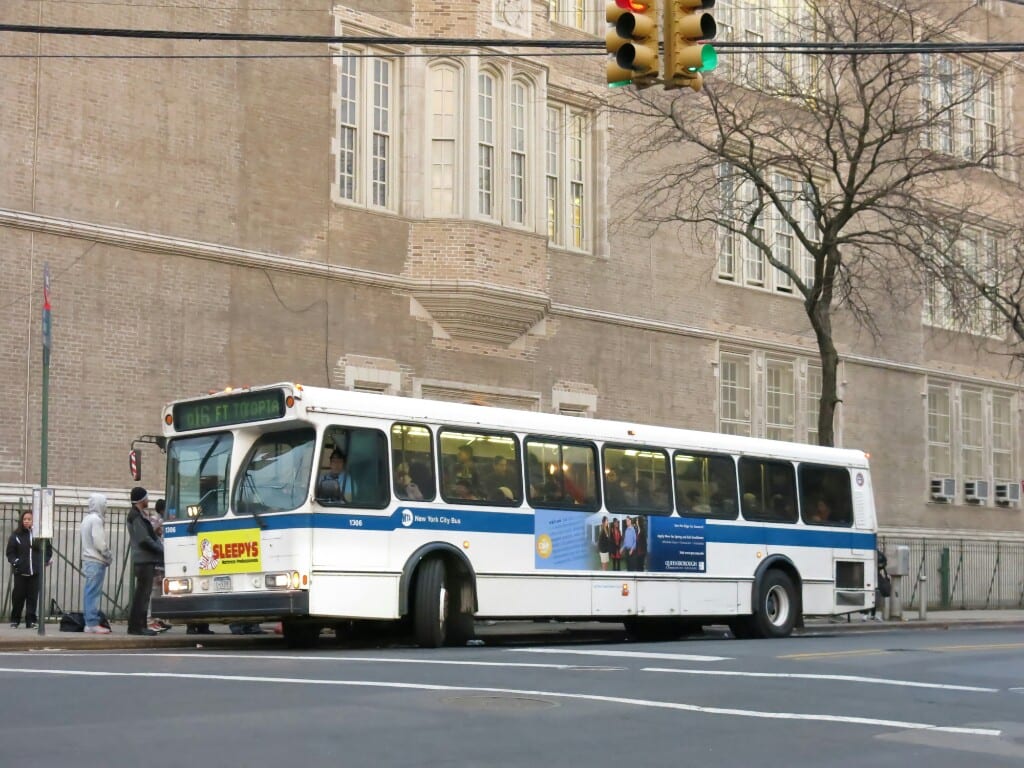
Mayor Zohran Mamdani and NYC Department of Transportation Commissioner Mike Flynn announced on June 2, 2026, that the city is restarting the long-stalled 34th Street busway, reviving a plan to bar most through cars from one of Manhattan’s most congested crosstown corridors and speed buses for roughly 28,000 daily riders.
The busway will run in both directions between Ninth Avenue and Third Avenue, operating daily from 6 a.m. to 10 p.m. Buses, trucks and emergency vehicles keep through access; private cars are required to turn off at the next available intersection rather than drive the length of the corridor. DOT projects the design will improve bus speeds by about 15 percent, lifting a route where buses currently average just 3 to 5 mph — slower than walking pace in parts.
A project paused, then revived
The 34th Street busway is not a new idea. It was advanced and then paused in 2025, during the Adams administration, after the Trump administration threatened the project as part of a broader confrontation with the city over street-space and transit policy. Mamdani, who took office January 1, 2026, framed the restart as the result of continued dialogue with federal officials and made faster, more reliable buses a signature of his transportation agenda.
The corridor is a Vision Zero priority street, flagged for a high number of traffic deaths and serious injuries, and the redesign is pitched as a safety measure as much as a speed one — fewer cars weaving across a dense crosstown route shared with pedestrians.
Part of a five-borough bus push
The 34th Street restart lands amid a wider DOT bus campaign. The agency is installing center-running bus lanes on Flatbush Avenue in Brooklyn — a Vision Zero corridor where 140 people were killed or severely injured over five years — with concrete boarding islands and tens of thousands of square feet of new pedestrian space. In April 2026 the Mamdani administration announced bus lanes and safety upgrades along Linden Boulevard for 60,000 daily riders, and DOT has proposed a center-running lane on Broadway in Queens to speed the Q70 to LaGuardia.
The model for 34th Street is 14th Street, where a busway launched in 2019 cut car traffic and sharply improved speeds on the M14 — over the early objections of some residents and a court challenge that the city ultimately won. DOT points to that corridor as evidence the approach works.
Why it matters
Bus riders are the most numerous and least pampered transit users in the city, disproportionately lower-income and outer-borough, and buses have been the slowest in the nation for years. Busways are cheap, fast to install and effective — but politically fraught, because they take road space from cars. The 34th Street fight, paused under federal pressure and revived by a new mayor, is a clean test of how far City Hall will push that trade. If the corridor delivers the promised 15 percent, it strengthens the case for the next busway; if it stalls again, it signals how much leverage Washington still holds over a city street.
Verification
- Mamdani and DOT Commissioner Mike Flynn announced June 2, 2026 restart; Ninth to Third Ave; 6 a.m.–10 p.m.; ~28,000 daily riders; 15% speed goal; 3–5 mph current — Our Town / ourtownny.com
- City announcement to restart 34th Street busway — NYC Mayor’s Office
- Project paused under Trump-administration threats; Mamdani revives citing federal dialogue — Gothamist
- Flatbush Avenue center-running bus lanes; 140 killed/severely injured in five years — NYC DOT
- Linden Boulevard bus lanes for 60,000 daily riders (April 2026) — NYC Mayor’s Office
Frequently Asked Questions
- What is the 34th Street busway?
- A redesign of 34th Street that restricts through car traffic between Ninth Avenue and Third Avenue from 6 a.m. to 10 p.m., keeping the corridor moving for buses, trucks and emergency vehicles. Cars must turn off at the next intersection. It serves about 28,000 daily bus riders.
- Why was it paused?
- The project was halted in 2025 after the Trump administration threatened it; the Mamdani administration revived it in June 2026, citing dialogue with federal officials.
- How much faster will buses go?
- NYC DOT projects roughly a 15 percent improvement in bus speeds. Buses currently crawl at about 3 to 5 mph on the corridor.
- Who announced the restart?
- Mayor Zohran Mamdani and NYC DOT Commissioner Mike Flynn, on June 2, 2026.