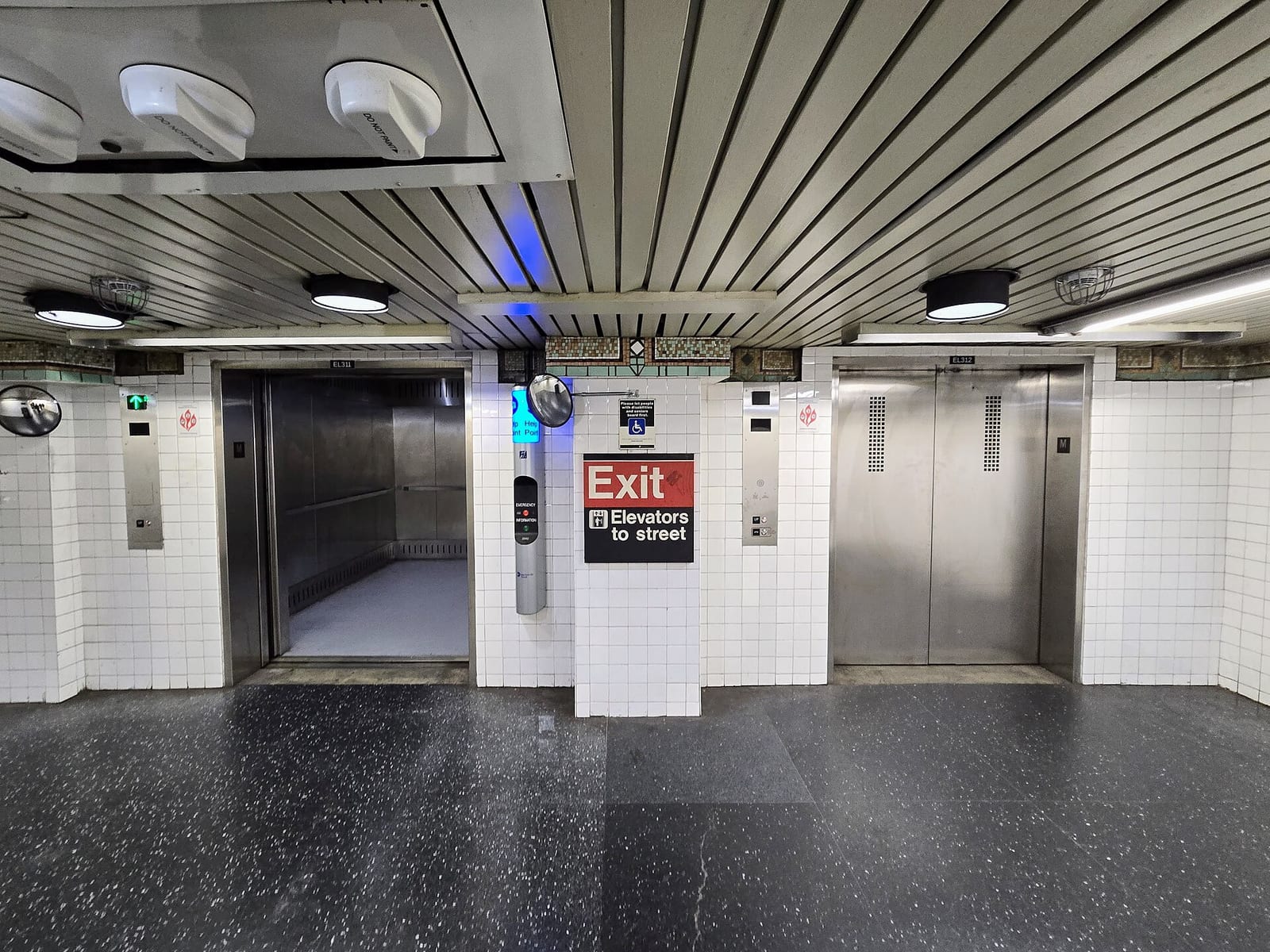
Accessibility upgrades at a cluster of Bronx and Manhattan subway stations are moving forward again after a delay of roughly two years and about $156 million, an interruption tied to a federal funding freeze that has now been lifted, allowing the MTA to resume installing elevators it is legally bound to build.
The work is governed by a landmark 2022 class-action settlement in which the MTA agreed to make 95 percent of subway and Staten Island Railway stations accessible — equipped with elevators or ramps providing a stair-free path — by 2055. A federal judge in Manhattan approved the agreement in 2023, locking the authority into one of the most aggressive transit-accessibility timelines in the country.
A delay measured in years
The accessibility program has been buffeted by federal funding turbulence. Elevator and ramp projects at several stations were stalled for roughly two years amid a freeze on federal money under the Trump administration, an interruption that affected on the order of $156 million in costs before the funds were released and crews returned to work.
That kind of stop-start churn is precisely what disability advocates warned about when they pressed the MTA into the settlement. Each delayed project pushes against the staggered deadlines the agreement imposes, and the system starts from a deep deficit: for decades, the overwhelming majority of the subway’s roughly 472 stations had no step-free path, making New York’s system one of the least accessible major metros in the world.
Where the count stands
The MTA says it completed 10 accessibility projects in 2025 — seven subway stations and three Long Island Rail Road stations — pushing the number of accessible subway stations past 150. The authority highlighted upgrades unveiled at stations including Harlem-148th Street as evidence the program is producing finished elevators, not just plans.
The settlement’s milestones are explicit. The MTA pledged to make dozens of additional subway and Staten Island Railway stations accessible by 2025, with further tranches due by 2035 and 2045 before the 95 percent threshold in 2055. Hitting those marks requires a steady construction cadence — exactly the thing a multi-year funding freeze threatens.
Why it matters
For wheelchair users, parents with strollers, older riders and anyone who can’t manage a flight of stairs, an inaccessible station is not an inconvenience but a wall. The 2022 settlement converted years of advocacy and litigation into a binding schedule, and the resumed Bronx and Manhattan elevator work is a test of whether that schedule can survive federal funding fights. The MTA’s broader accessibility push is folded into its 2025–2029 capital program, which the authority has said depends in part on congestion-pricing revenue — a reminder that elevators, like signals and track, ride on the same contested funding streams.
Verification
- 2022 settlement requires 95% of stations accessible by 2055; judge approved 2023; staggered milestones — amNewYork: MTA settles lawsuits, 95% accessible by 2055
- Bronx/Manhattan elevator projects resume after ~2-year, $156M delay tied to federal funding freeze — THE CITY
- MTA completed 10 accessibility projects in 2025 (7 subway, 3 LIRR); 150+ accessible subway stations — Governor Hochul press release
- Harlem-148th Street accessibility upgrades — MTA press release
- MTA station accessibility program overview and settlement notice — mta.info
Frequently Asked Questions
- What is the 95 percent accessibility settlement?
- In 2022 the MTA settled class-action lawsuits by agreeing to make 95 percent of subway and Staten Island Railway stations accessible — with elevators or ramps — by 2055, with interim milestones along the way. A federal judge approved the deal in 2023.
- What was the $156 million delay about?
- Accessibility work at several Bronx and Manhattan stations was held up for roughly two years amid a federal funding freeze under the Trump administration, with about $156 million in affected costs, before the money was released and work resumed.
- How many subway stations are accessible now?
- The MTA says it completed 10 accessibility projects in 2025 — seven subway stations and three Long Island Rail Road stations — bringing the number of accessible subway stations past 150.
- When must the MTA hit its targets?
- The settlement set staggered deadlines: dozens of additional stations made accessible by 2025, more by 2035 and 2045, reaching 95 percent by 2055.