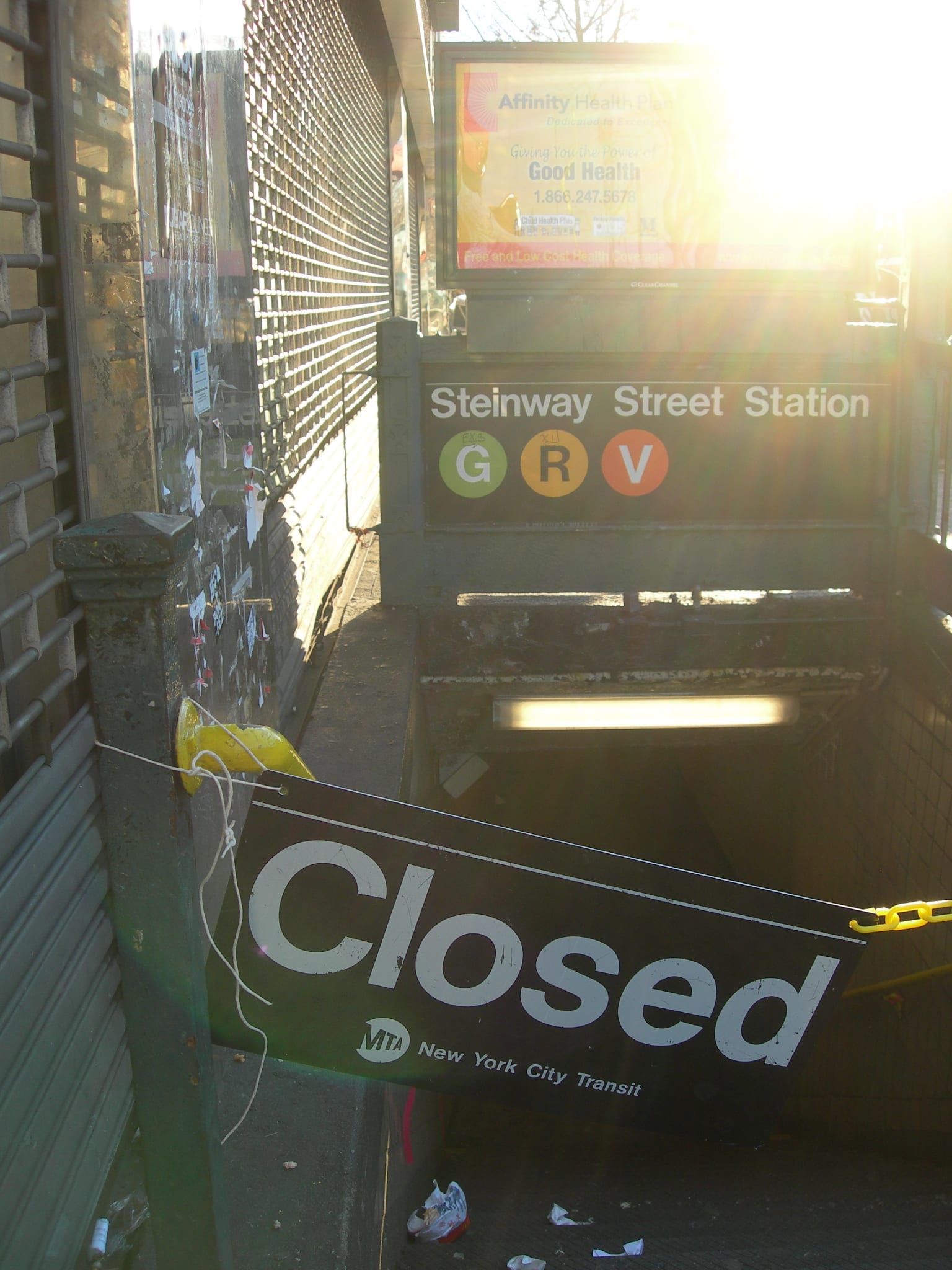
Fare and toll evasion cost the Metropolitan Transportation Authority about $1 billion in 2024, according to a report from the Citizens Budget Commission (CBC), the nonpartisan fiscal watchdog — a staggering figure that has become central to the MTA’s fights over enforcement, station design and fare policy.
The report, released in September 2025, breaks the loss down by mode: roughly $568 million in unpaid bus fares, about $350 million on the subway, at least $46 million on commuter rail (the Long Island Rail Road and Metro-North), and at least $51 million in unpaid bridge-and-tunnel tolls.
Buses bleed the most
The single most striking finding is how much of the loss comes from buses, where unpaid fares alone exceeded subway and commuter-rail evasion combined. With rear-door boarding, all-door designs and limited fare verification, buses are the easiest place to ride without paying — and the hardest to police. The CBC estimated that in 2024 an average of about 330 subway fares and 710 bus fares were evaded every minute.
The trend is improving
There is better news inside the numbers. The CBC found that evasion rates declined from the third quarter of 2024 through the second quarter of 2025, even as ridership climbed. If that trend held, the watchdog projected, total fare-and-toll evasion losses for 2025 could fall toward roughly $900 million — still a major hole, but smaller than 2024.
The MTA’s own data echoed the improvement. The agency reported that subway evasion fell about 29 percent year-over-year, with reductions of around 36 percent at stations where gate guards are stationed.
Enforcement scales up
The MTA has leaned into a multi-pronged enforcement strategy rather than a single crackdown. Civil summonses rose from about 13,600 in the third quarter of 2021 to a peak of 38,422 in the third quarter of 2024 before easing to about 29,000 in the first quarter of 2025. Arrests climbed from 655 in late 2022 to 4,092 in the first quarter of 2025.
Beyond tickets and arrests, the agency has redesigned station fare-control areas to make jumping or pushing through harder, expanded dedicated bus inspection teams, and installed gate guards and new fare gates at high-evasion stations. MTA Chief Financial Officer Jai Patel has called fare evasion an “existential” threat to the authority’s finances.
Why it matters now
The $1 billion figure has political weight because it collided with the MTA’s push for fare increases. Critics — including some state lawmakers — argued it was hard to ask paying riders to absorb higher fares while a billion dollars a year walks through the gates unpaid. State Senator Pete Harckham called fare hikes “incomprehensible” in light of the evasion report.
For the MTA, the report is both a warning and a partial defense: the losses are enormous, but the trend lines and enforcement data suggest the agency is, slowly, clawing some of it back.
Verification
- ~$1 billion in 2024 fare/toll evasion; breakdown $568M bus, $350M subway, $46M+ commuter rail, $51M+ tolls — Citizens Budget Commission report: https://cbcny.org/research/no-fare and NY1: https://ny1.com/nyc/all-boroughs/news/2025/09/11/fare-evasion-cost-mta—1-billion-in-2024-report-says
- ~330 subway and ~710 bus fares evaded per minute in 2024 — CBC: https://cbcny.org/research/no-fare
- Evasion rates declined Q3 2024–Q2 2025; 2025 losses projected toward ~$900M — CBC: https://cbcny.org/research/no-fare
- Civil summonses 13,607 (Q3 2021) → 38,422 (Q3 2024) → 29,046 (Q1 2025); arrests 655 (Q4 2022) → 4,092 (Q1 2025); CFO Jai Patel “existential”; subway evasion down ~29%, ~36% at gate-guard stations — NY1 (above) and CBC (above)
- State Sen. Pete Harckham calls fare hikes “incomprehensible” after the report — NY Senate: https://www.nysenate.gov/newsroom/press-releases/2025/pete-harckham/harckham-calls-fare-hikes-incomprehensible-after-1
Frequently Asked Questions
- How much did fare evasion cost the MTA?
- About $1 billion in 2024, according to the Citizens Budget Commission. The breakdown: roughly $568 million in unpaid bus fares, $350 million on the subway, at least $46 million on commuter rail (LIRR and Metro-North) and at least $51 million in unpaid bridge-and-tunnel tolls.
- Which mode loses the most to evasion?
- Buses, by a wide margin. Unpaid bus fares accounted for roughly $568 million of the 2024 total — more than the subway and commuter rail combined — reflecting how easy it is to board a bus without paying.
- Is evasion getting better or worse?
- The report found evasion rates declined from the third quarter of 2024 through the second quarter of 2025 as ridership rose. The CBC projected that if the trend held, 2025 losses could fall toward roughly $900 million — still substantial, but lower than 2024.
- What is the MTA doing about it?
- Enforcement has scaled up sharply: civil summonses and arrests both rose through early 2025, and the MTA has deployed gate guards, redesigned station fare areas and added bus inspection teams. The agency says subway evasion fell about 29% year-over-year, with bigger drops where gate guards are stationed.